
Were You There, Peter?
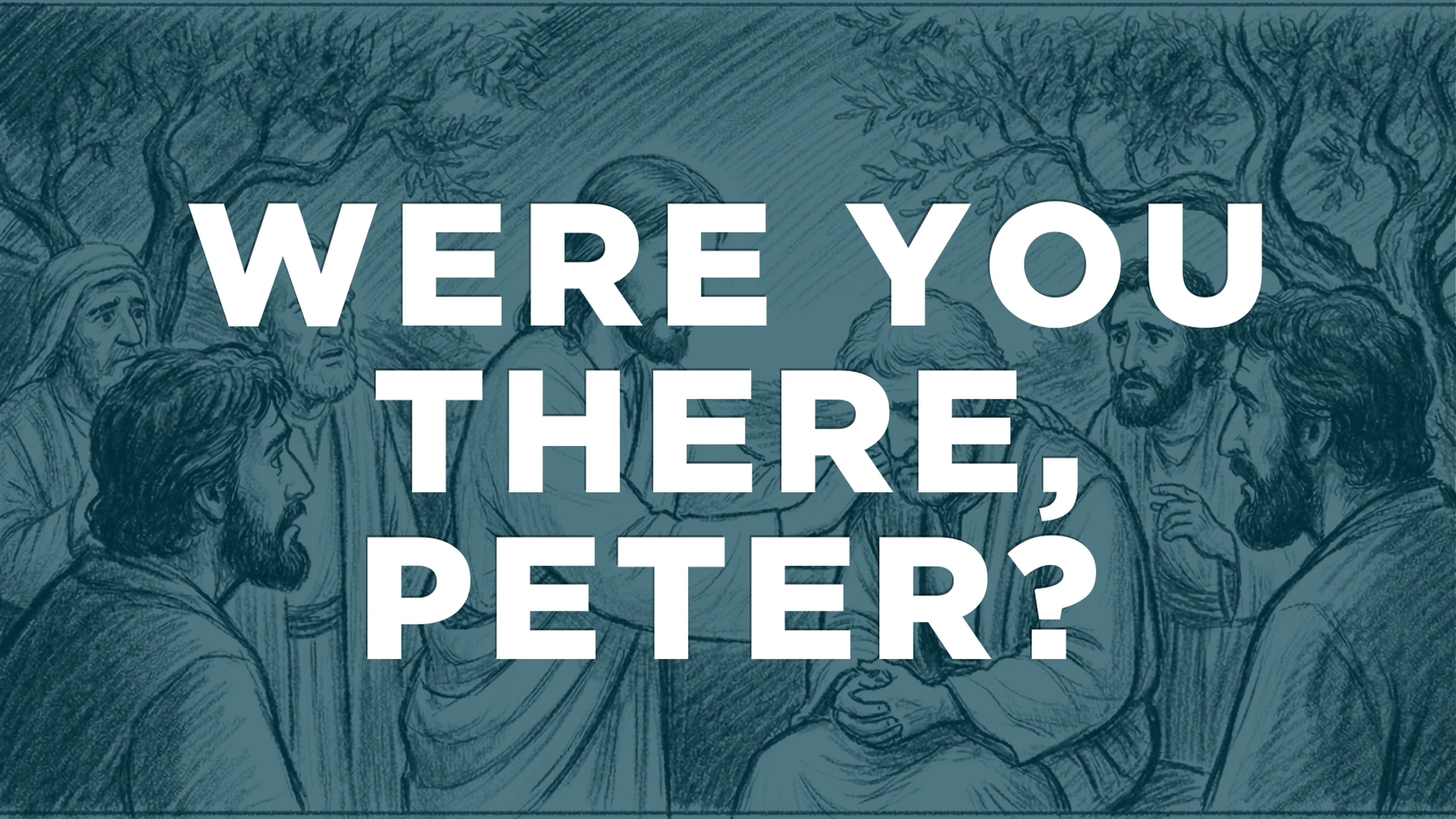
When Faith Fails: Peter's Denial and God's Amazing Grace
We all have moments when our faith feels strong and unshakeable. We declare our commitment to Christ with confidence, ready to stand firm no matter what comes our way. But what happens when that confidence crumbles? What do we do when we find ourselves denying Christ through our actions, words, or silence?
The story of Peter's denial offers both a sobering reminder of human weakness and a powerful testimony to God's restoring grace. Through Peter's experience, we see our own struggles reflected and discover hope for redemption when we fall short.
Who Was Peter Before His Fall?
The Rock Who Left Everything
Peter wasn't just any follower of Jesus. Originally named Simon, he was a successful fisherman who left his entire business behind when Jesus called him to “follow me.” Jesus gave him the name Peter, meaning “rock,” because he saw the foundation this man would become for the early church.
Peter demonstrated remarkable faith throughout his time with Jesus. He was the disciple who stepped out of the boat to walk on water when others stayed safely inside. When Jesus asked, “Who do you say that I am?” it was Peter who boldly declared, “You are the Christ.”
Bold Declarations and Fierce Loyalty
When Jesus warned his disciples that they would all fall away, Peter's response was immediate and emphatic: “Even if all fall away, I will not.” He insisted that even if he had to die with Jesus, he would never disown him. This wasn't empty bravado. Peter backed up his words with action, wielding a sword to defend Jesus during his arrest.
Yet Jesus knew what was coming. He warned Peter specifically: “Before the rooster crows twice, you yourself will disown me three times.” Despite Peter's protests, Jesus saw the weakness that would soon be exposed.
How Do We Deny Christ Today?
The Subtle Ways We Fall Away
Most of us haven't stood before a crowd and openly denied Christ. But denial can take many forms in our daily lives. Consider Jack, a faithful church member who gradually compromised his values under peer pressure, eventually finding himself in jail after a night of drinking and gambling. Or Bobby, a young woman who had served faithfully but fell into a relationship that led her away from her commitment to purity.
These stories remind us that denial often happens gradually. We might:
- Stay silent when our faith is challenged
- Compromise our values to fit in
- Live differently at work than we do at church
- Avoid standing up for what's right to prevent conflict
- Let our actions contradict our words
The Danger of Self-Confidence
Peter's downfall began with overconfidence in his own strength. He was attacked at the point where he felt strongest: his loyalty to Christ. This teaches us that we're most vulnerable when we rely on our own abilities rather than depending on God's strength.
As Peter later wrote to the early church: “Be self-controlled and alert. Your enemy the devil prowls around like a roaring lion looking for someone to devour.” He learned from experience that no one is beyond the possibility of failure.
What Does Denial Look Like?
The Downward Spiral
Peter's three denials show a progressive deterioration:
First Denial: Playing Ignorant
When confronted by a servant girl, Peter claimed he didn't know what she was talking about. This wasn't outright denial but rather an attempt to blend in and avoid confrontation.
Second Denial: The Quiet Game
When pressed again, Peter remained largely silent. Sometimes we play this quiet game with our faith, keeping it private to avoid making waves or creating conflict.
Third Denial: Outright Rejection
Finally, Peter began cursing and swearing, emphatically denying any connection to Jesus. He had completely abandoned his earlier boldness.
The Moment of Recognition
When the rooster crowed for the second time, Peter remembered Jesus' words. In that moment of recognition, he broke down and wept. The Greek word used here suggests he threw the full weight of his failure around his neck like a heavy burden.
This deep remorse is crucial for true repentance. It's not enough to simply acknowledge our mistakes. We must feel the weight of how our actions have grieved the heart of God.
How Does God Respond to Our Failures?
Grace That Transforms Brokenness
The beautiful truth about Peter's story is that it doesn't end with his failure. Just as a grain of sand irritating an oyster eventually becomes a beautiful pearl, God uses our brokenness to create something beautiful.
Peter lost his impulsiveness and pride, but he gained humility and a grace-filled testimony. His failure became the foundation for a ministry that would impact thousands. On the day of Pentecost, this same Peter boldly proclaimed the gospel, and 3,000 people came to faith.
The Restoration by the Fire
After Jesus' resurrection, he met with Peter beside a charcoal fire, the same type of fire where Peter had denied him. The smell would have triggered powerful memories, but this time it was a place of restoration, not denial.
Three times Jesus asked Peter, “Do you love me?” once for each denial. And three times he gave Peter a commission: “Feed my sheep.” Jesus was saying, “Your failures don't define you. I define you. You're not finished. I have work for you to do.”
What Can We Learn from Peter's Story?
Failure Doesn't Disqualify Us
Peter's story teaches us that God specializes in using broken people. The early church wasn't built on perfect individuals but on those who had experienced failure and restoration. When Peter later stood before the courts, they noted that he and John were “unschooled, ordinary men,” but recognized that they had been with Jesus.
Repentance Opens the Door to Grace
The key difference between Peter and Judas was that Peter checked the back door called grace. When we fail, we have a choice. We can run away in shame, or we can run toward Jesus in repentance.
True repentance involves three steps:
- Confession: honestly acknowledging our failure
- Deep remorse: feeling genuine sorrow for grieving God
- Turning back: choosing to return to Jesus rather than running away
Life Application
Peter's story challenges us to examine our own lives honestly. Are there areas where we've been denying Christ through our actions, words, or silence? Perhaps we've compromised our values, stayed quiet when we should have spoken up, or allowed our walk to contradict our talk.
The good news is that Jesus is greater than our brokenness. No matter how far we've fallen, grace is available to restore us and use us again. Like Peter, we can move from denial to bold proclamation of the gospel.
This week, consider these questions:
- In what areas of my life am I most tempted to compromise my faith?
- Where have I been playing the quiet game instead of standing up for Christ?
- What failures or shame am I carrying that I need to bring to Jesus for restoration?
- How can my experiences of failure and grace become a testimony to help others?
Remember, Jesus asks each of us the same question he asked Peter: “Do you love me?” Our answer isn't just found in our words on Sunday morning, but in how we live Monday through Saturday. Let your life be a testimony to his amazing grace that picks up the fallen and makes them useful again.